
Ayman van Bregt (Netherlands) and Marineuza (Portugal) are both members of the CXPA Europe Council. They recently met in person for the first time over coffee — and the conversation went exactly where you’d expect.
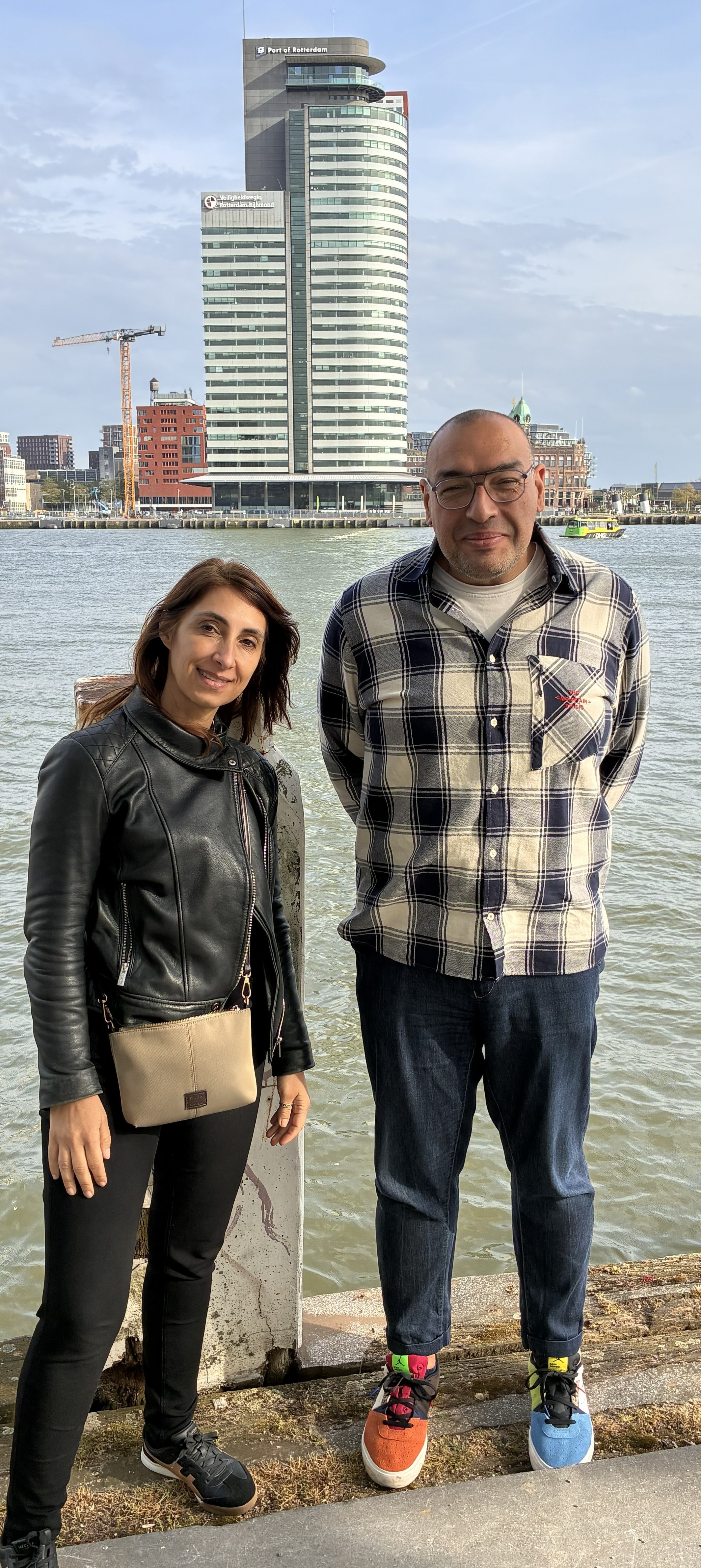
Marineuza: We had this planned, but I wasn’t quite sure where the conversation would go. And then within five minutes we were deep into the question of whether CX is actually understood in most organisations — or just tolerated.
Ayman: That’s the honest version of most CX conversations I have. There’s a gap between what organisations say about customer experience and what they actually invest in — structurally, culturally. CX often lives in one team, maybe one enthusiastic person, while the rest of the organisation carries on as before.
Marineuza: I recognise that. In Portugal, I sometimes feel we’re still at the stage of explaining what CX actually is — convincing people it’s not just customer service with a new name. But when I talk to colleagues across Europe, I realise it’s not just a Portuguese challenge.
Ayman: Exactly. The Netherlands has a reputation for being digitally advanced, but that doesn’t automatically mean CX is mature. You can have excellent technology and still deliver a fragmented, impersonal experience. Digital and human aren’t opposites — but a lot of organisations treat them that way. They automate the interaction and forget the experience.
Marineuza: That connects to something I’ve been thinking about with AI. There’s so much excitement — and pressure — to implement it. But I wonder if organisations are ready for it. If your fundamentals aren’t clear, doesn’t AI just make the confusion faster?
Ayman: That’s precisely it. AI doesn’t fix a weak CX strategy — it accelerates it, in whatever direction it’s already going. If the experience is thoughtful and human-centred, AI can genuinely amplify that. If it isn’t, AI just exposes the gaps more visibly, and more publicly. The organisations that will do this well are the ones that understand AI as a tool within a larger design — not the design itself.
Marineuza: So what gives you hope? Because the challenges are real — the isolation, the internal politics, the difficulty of proving ROI. What keeps you going in this work?
Ayman: Honestly? Conversations like this one. The moment you sit across from someone who genuinely gets it — who doesn’t need you to justify why CX matters — something shifts. That’s rare inside a company. But it exists. And the more we create spaces where those conversations happen, the less alone people feel in doing this work.
Marineuza: I think that’s what I’d want someone to take from this. Whether you’re deep into CX or just starting to name what you’ve always been doing — you’re not figuring this out alone. There are people across Europe having the same conversations, facing the same walls, and still choosing to push.
Ayman: And occasionally meeting in a coffee shop in the Netherlands and realising it’s the same wall, just a different language.
Ayman van Bregt is a digital strategist and founder of Ignite.cx, specialised in digital value creation and human-centered customer experience. Marineuza is a Director of Member Experience & Quality and member of the CXPA Europe Council. Both are active members of the Customer Experience Professionals Association.
Thao Nguyen, CCXP, shares how she shifted her thinking to overcome obstacles and achieve success on the CCXP exam.
Every CX team has a growing list of customer pain points, employee feedback, and improvement ideas, but not everything can happen at once. In this article, Lauren Feehrer, CCXP explores how Agile thinking can help CX leaders prioritize effectively, reduce overwhelm, and turn insight into meaningful progress.
After traveling from Vietnam to attend CX Leaders Advance 2026 in Toronto, Lily Hang, CCXP reflects on eight themes shaping the future of customer experience—from business leadership and AI governance to journey management, customer vulnerability, and proving business impact.
As AI makes personalization commonplace, what will truly differentiate customer experiences? Rachel Cope, CCXP explores a future where trust, authenticity, ethics, and human values become more important than technology itself.